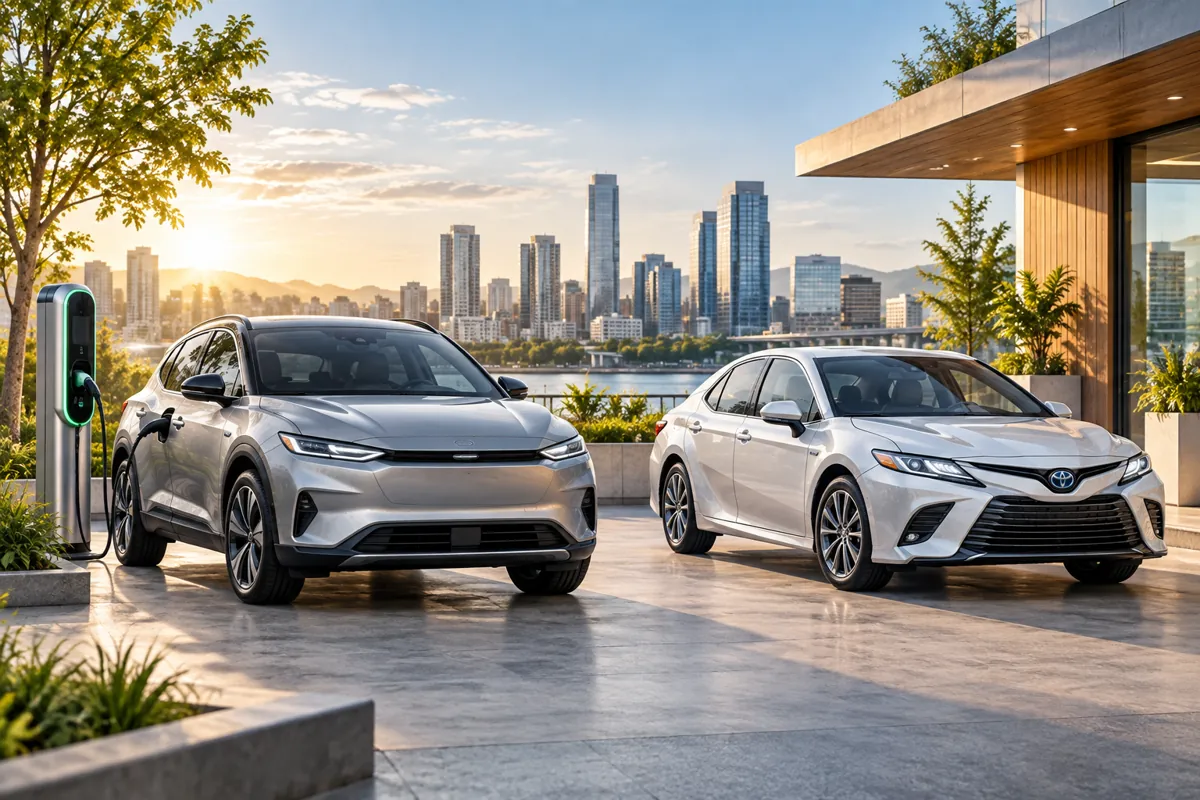
EVs & Hybrids
Electric cars, hybrids, range and charging
Introduction
Electric vehicles (EVs) and hybrid vehicles have become prominent alternatives to traditional internal combustion engine (ICE) cars. With more than 10 million EVs on the road worldwide in 2023, their popularity continues to surge as consumers seek more sustainable and cost-effective transportation options. These vehicles are not just eco-friendly; they also offer advantages such as lower fuel costs, reduced maintenance expenses, and compliance with increasingly strict emission regulations.
Understanding the technology behind EVs and hybrids is essential for anyone considering a switch or investing in the future of mobility. This guide provides a comprehensive overview, explaining the core concepts, operational mechanisms, practical applications, common pitfalls, and expert advice. It aims to clarify how these vehicles function and why they are shaping the automotive industry's trajectory in the 21st century.
Definition and core concepts
Electric vehicles primarily use one or more electric motors powered by batteries instead of a traditional gasoline or diesel engine. These batteries are usually made of lithium-ion cells, offering high energy density and long life spans. Pure EVs, such as the Nissan Leaf or Tesla Model 3, are powered solely by electricity stored in onboard batteries.
Hybrids combine an internal combustion engine with an electric motor. They can operate solely on the combustion engine, solely on electric power, or in a combined mode. The most common types include hybrid electric vehicles (HEVs), plug-in hybrid electric vehicles (PHEVs), and mild hybrids. HEVs, like the Toyota Prius, do not require external charging; they recharge through regenerative braking and engine operation. PHEVs, such as the Chevrolet Volt, can be plugged into external power sources, offering a range of up to 50 miles on electric mode alone.
Key terms include battery electric vehicle (BEV), plug-in hybrid electric vehicle (PHEV), and hybrid electric vehicle (HEV). Battery capacity, measured in kilowatt-hours (kWh), indicates range potential for EVs. For example, a 60 kWh battery typically supports a range of 250 to 370 miles depending on efficiency and driving conditions.
Efficiency metrics are vital. Electric cars are rated by miles per kilowatt-hour (mi/kWh) or energy consumption in watt-hours per mile (Wh/mile). Modern EVs average 250 Wh/mile, resulting in a typical 100-mile trip consuming about 25 kWh of energy. Hybrids, meanwhile, combine gasoline engine efficiency with electric assist, often achieving 40-60 miles per gallon (mpg), depending on model and driving style.
How it works
Pure EVs operate entirely on electricity from their batteries, which power an electric motor connected to the drivetrain. When you press the accelerator, a controller draws current from the battery and supplies it to the motor. Regenerative braking systems recover kinetic energy during deceleration, converting it into electrical energy to recharge the battery. This process often qualifies as a significant factor extending the vehicle's range.
The charging process involves plugging the vehicle into various power sources. Level 1 chargers use standard household outlets (120 volts) and provide about 4-5 miles of range per hour of charging. Level 2 chargers operate at 240 volts, offering 15-25 miles of range per hour. Fast chargers (DC fast charging) provide 60-150 kW power, enabling 80% charge in approximately 30 minutes, suitable for long-distance travel.
Hybrid vehicles combine a gasoline engine with an electric motor and a battery. The electric motor assists during acceleration, climbing hills, or achieving higher efficiency at steady speeds. During deceleration or braking, regenerative systems convert kinetic energy into electrical energy stored in the battery. The vehicle's control system seamlessly switches between power sources based on driving conditions, with some models able to operate exclusively on electric power at low speeds.
The internal combustion engine in hybrid vehicles remains a vital component, often optimized for fuel efficiency through technologies like direct fuel injection and variable valve timing. The system’s management controller dictates when to switch between electric and gasoline power to maximize efficiency and reduce emissions. Certain models, such as the Toyota Hybrid System, utilize a planetary gear set to connect the engine, electric motor, and wheels, enabling smooth power delivery.
Charging infrastructure development has expanded rapidly. According to the International Energy Agency (IEA), there were over 1.3 million public charging points worldwide at the end of 2022, with a growth rate of 50% year over year. This infrastructure growth supports both daily commuting and long-distance travel for EV owners.
Practical application
EVs and hybrids are increasingly integrated into daily transportation routines. For urban commuters, EVs are appealing due to their lower operating costs and zero tailpipe emissions. Electric cars cost between 2.5 and 4.0 cents per mile to operate, compared to 10-15 cents per mile for gasoline-powered vehicles, according to the US Department of Energy. Over a vehicle lifespan of 150,000 miles, this results in savings of up to $10,000 or more on fuel alone.
Charging options vary based on user needs. Home charging stations, typically costing between $1,000 and $2,000, allow overnight charging and can be installed within a day in most cases. Public charging networks serve workplaces, shopping centers, and highways, providing convenient refueling options. Fast chargers are essential for long-distance travel, reducing charging time to less than 30 minutes for up to 80% battery capacity.
Hybrids serve as transitional vehicles, especially in areas with limited charging infrastructure. They eliminate range anxiety, as the gasoline engine provides a backup when batteries deplete. For example, a typical PHEV like the Mitsubishi Outlander PHEV can travel 22 miles on electric power before switching to hybrid mode, combining electric driving with a 13.8-gallon fuel tank for extended journeys.
In terms of maintenance, EVs have fewer moving parts than internal combustion engines—no oil changes, fewer fluid replacements, and less brake wear due to regenerative braking systems. Battery replacement costs, however, can range from $3,000 to $7,000 after the vehicle exceeds 8-10 years, depending on the model and usage. Manufacturers such as Tesla and Nissan provide warranties of 8 years or 100,000 miles on their batteries.
government incentives have encouraged adoption. For example, the US federal tax credit of up to $7,500 applies to new EV purchases, although these incentives are phasing out for some models. Several European countries also provide tax breaks, reduced registration fees, and access to prioritized lanes for EV drivers. These policies influence market penetration and consumer preferences over time.
Smart charging technologies are gaining momentum. Vehicle-to-grid (V2G) systems enable EV batteries to supply energy back to the grid during peak demand, offering potential revenue streams for owners. Implementing such systems requires compatible hardware and coordinated policies but could transform EVs from mere transportation devices into energy storage units.
Common mistakes
One frequent mistake is underestimating charging times, especially when relying solely on Level 1 or Level 2 chargers. Long waiting periods or lack of access can make daily use inconvenient. For long-distance trips, neglecting to plan for fast charging stops can lead to delays and frustration.
Another error involves ignoring the battery’s thermal management. Exposure to extreme temperatures impacts battery performance and lifespan. Vehicles operating in very cold or hot climates require proper insulation, preconditioning, and sometimes additional cooling systems. Failing to maintain these can result in reduced range and accelerated battery degradation.
Purchasing a hybrid or EV without considering infrastructure availability is problematic. In regions with sparse charging stations, relying on an EV can be impractical. Consumers should verify local charging options and gauge their weekly driving patterns before making a purchase.
Lastly, neglecting regular maintenance or monitoring the health of the battery can lead to unexpected failures. Many manufacturers provide onboard diagnostics, but owners should also track battery capacity and charging behaviors to maximize lifespan. Using incompatible chargers or overcharging can accelerate battery wear, so following manufacturer guidelines is important.
Expert recommendations
Automotive engineers advise choosing a vehicle with a battery size that suits your needs. For average drivers traveling under 40 miles daily, a PHEV or a smaller EV with a 40-50 kWh battery may suffice. For longer commutes, consider models offering at least 75 kWh, which provides ranges exceeding 300 miles.
Charging speed and infrastructure compatibility are key factors. Investing in a Level 2 home charger, costing approximately $1,200 to $2,000 including installation, can significantly improve convenience. Using fast chargers strategically during trips minimizes downtime but should not replace regular home charging for daily use.
Manufacturers increasingly incorporate thermal management systems. For example, solid-state batteries, expected in mass-market vehicles by 2025, will operate efficiently at wider temperature ranges. These advancements extend battery life, reduce degradation, and improve safety.
For hybrid drivers, selecting models with regenerative braking systems that capture at least 80% of deceleration energy can maximize efficiency. Regularly maintaining the cooling systems and monitoring software updates can further optimize performance and lifespan.
Conclusion
Electric and hybrid vehicles represent a significant shift in automotive technology, driven by environmental concerns, economic factors, and technological advancements. They offer tangible benefits such as lower operational costs, reduced emissions, and improved driving experience in many cases. However, adopting these vehicles requires understanding their operation, infrastructure needs, and potential pitfalls.
Consumers and industry stakeholders must pay attention to technical developments, infrastructure expansion, and evolving policies. Only then can the full benefits of EVs and hybrids be realized, shaping the future of transportation toward sustainability and efficiency.