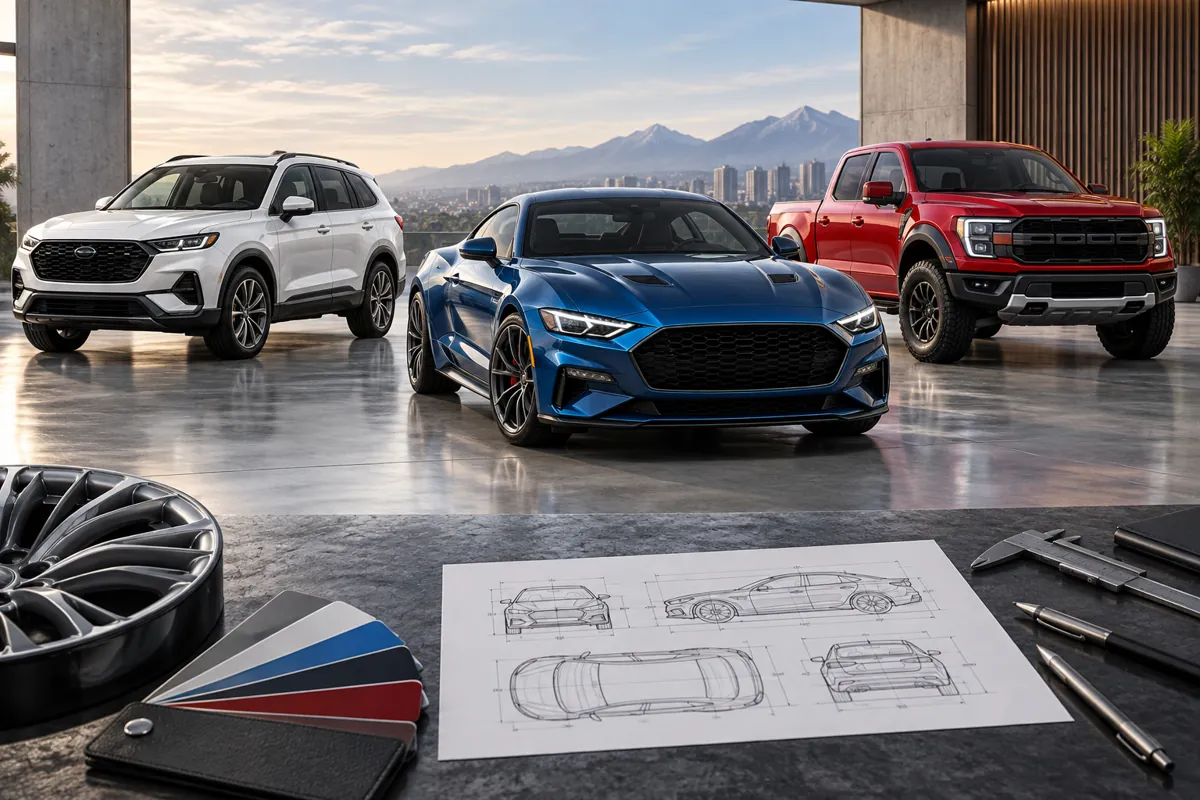
Car Models & Specs
Specs, dimensions and comparisons across car models
Introduction
Understanding different car models and their specifications is fundamental for anyone considering a vehicle purchase or simply interested in automotive technology. With thousands of models available worldwide, each with unique features, engine options, and design elements, making an informed choice can be daunting. This overview aims to clarify the core concepts and provide practical insights into navigating the landscape of car models and specs.
Accurate knowledge of a vehicle’s specifications enables buyers to compare options effectively, assess performance, and anticipate maintenance needs. Whether shopping for a compact city car, a family SUV, or a high-performance sports car, knowing what distinguishes one model from another saves time and money, and ensures the vehicle aligns with personal requirements and budget constraints.
Definition and core concepts
A car model refers to a specific version of a vehicle manufactured by an automaker, often distinguished by design, features, and engine configurations. Car specifications, or specs, detail the technical aspects of these models, including engine size, power output, fuel efficiency, dimensions, weight, and safety features.
Engine size, commonly measured in liters (L) or cubic centimeters (cc), indicates the engine's capacity to displace air and fuel. For example, a 2.0L engine typically offers a balance of power and fuel economy, while a 3.0L engine provides more horsepower for higher performance. Power output is expressed in horsepower (hp) or kilowatts (kW); a compact sedan might have 120 hp, while a sports car can reach 600 hp or more.
Dimensions such as length, width, height, and wheelbase influence the vehicle’s handling, interior space, and parking capabilities. Safety features like airbags, anti-lock braking systems (ABS), electronic stability control (ESC), and collision avoidance systems are also documented as part of the specs, contributing to the overall assessment of the model.
A comprehensive understanding of these core components enables consumers and professionals alike to evaluate suitability and performance for specific needs. Car models are often classified into categories such as compact, sedan, SUV, truck, and sports car, each with tailored specifications designed for particular uses.
How it works
The functioning of car models and their specifications hinges on the engineering principles built into their design. Engine configurations, such as inline-four or V6, impact power delivery and efficiency. For instance, an inline-four engine, found in many compact cars like the Honda Civic 1.5L, offers simplicity and reliability. In contrast, V8 engines, like those in the Ford Mustang GT, deliver higher horsepower but at the expense of increased fuel consumption.
Fuel efficiency ratings, typically expressed in miles per gallon (MPG) or liters per 100 kilometers (L/100 km), result from a combination of engine type, vehicle weight, aerodynamics, and transmission technology. For example, hybrid models like the Toyota Prius can achieve over 50 MPG in city driving, combining an internal combustion engine with electric motors for optimal efficiency.
Transmission systems also play a role in how power reaches the wheels. Manual transmissions, found in older models and some sporty cars, offer direct control but require driver skill. Automatic transmissions and continuously variable transmissions (CVT) provide smoother acceleration and are increasingly common in modern vehicles like the Honda Accord or Subaru Outback.
Chassis design and suspension systems influence handling and ride comfort. SUV models such as the Toyota RAV4 feature higher ground clearance and robust suspension to handle diverse terrain, while sedans like the Mazda 6 emphasize ride smoothness and cornering stability.
Safety systems operate through sensors, cameras, and computing units to monitor and respond to driving conditions. Lane departure warnings, automatic emergency braking, and adaptive cruise control exemplify how technology integrates into the specifications of recent models, improving safety and driving assistance.
Practical application
Car specifications directly impact everyday use. For city commuting, models like the Volkswagen Polo with a 1.0L engine and an average fuel consumption of 4.5 L/100 km are practical choices. They provide lower running costs, easy parking, and adequate space for urban environments. On the other hand, long-distance travelers often prefer models with larger fuel tanks and higher highway efficiency, such as the Chevrolet Malibu with a 1.8L turbo engine achieving approximately 6.5 L/100 km on highway tests.
In the realm of performance, sports cars like the Porsche 911 offer 370 hp from a 3.0L twin-turbo engine, enabling acceleration from 0 to 100 km/h in about 4 seconds. Such specs appeal to driving enthusiasts and those seeking high speed and agility. Heavy-duty trucks, like the Ford F-250 Super Duty, boast payload capacities exceeding 1,000 kilograms and towing capacities above 4,000 kilograms, making them indispensable for commercial use.
Families often select SUVs based on safety and space features. The Subaru Outback, equipped with a 2.5L engine and all-wheel drive, features a cargo capacity of up to 1,000 liters and includes safety specs like adaptive cruise control and lane assist. Indoor comfort is enhanced with optional leather upholstery, heated seats, and advanced infotainment systems.
Electric vehicles (EVs) are increasingly relevant in practical scenarios. The Tesla Model 3, with battery options supporting ranges of up to 560 kilometers per charge, offers rapid acceleration (0-100 km/h in 3.3 seconds) and lower maintenance costs due to fewer moving parts. Such specs make EVs suitable for urban commuting and long-distance travel without the concern of fuel stations.
Manufacturers update models annually, often improving specs such as power output, safety features, or fuel economy. Consumers monitor these changes to assess value, balancing initial purchase cost against ongoing expenses and utility. Technical documentation, test reports, and owner reviews are essential tools for making these evaluations.
In fleet management, understanding specs aids in optimizing vehicle selection for different operational needs. Companies often choose vehicles with higher reliability ratings, lower fuel consumption, and adequate payload capacities to maximize productivity and reduce costs.
Overall, the pragmatic application of car specs ties directly to the user's daily routine, budget, and performance expectations. Analyzing the specific numbers—like a 7.4-second 0-100 km/h acceleration or a towing capacity of 2,000 kilograms—guides informed decision-making across a broad spectrum of automotive use cases.
Real-world testing and manufacturer data serve as reference points, but practical considerations such as availability of service centers, resale value, and personal preferences also influence choices. The intersection of these factors shapes how specs translate into everyday performance.
Ultimately, detailed knowledge of vehicle specifications empowers consumers to select models aligned with their driving habits, safety requirements, and budget. This approach ensures a vehicle's capabilities meet expectations for efficiency, safety, and durability over its lifespan.
Common mistakes
One frequent error is focusing solely on horsepower when selecting a vehicle. While high horsepower can mean faster acceleration, it often results in higher fuel consumption and increased maintenance costs. For example, choosing a 500 hp sports car over a similarly priced sedans with 150 hp could lead to fuel expenses rising by 30 to 50 percent.
Another mistake involves ignoring curb weight and payload capacities. A vehicle with a high engine power but insufficient payload capacity can be unsafe when towing or transporting heavy loads. An SUV rated for a maximum of 800 kilograms will not be suitable for frequent towing of 1,200 kilograms, risking mechanical stress and safety hazards.
Failing to consider actual fuel economy results versus manufacturer ratings is also common. Many drivers report that city driving yields much lower MPG than advertised. For example, a model claiming 25 MPG might only provide 18 MPG in real-world urban conditions, leading to higher operating costs than expected.
Overlooking compatibility with regional emission standards can cause compliance issues. Vehicles designed for European markets, adhering to Euro 6 standards, may not meet older regulations elsewhere. Importing such models without adequate modification can result in fines and legal complications.
Many buyers neglect the importance of safety features aligned with their driving environments. A model equipped with advanced driver-assistance systems may not be suitable if the necessary hardware or software updates are unavailable in their region. Evaluating the availability and support for these specs prevents disappointment after purchase.
Ignoring maintenance costs tied to specific specs can also lead to regret. Vehicles with complex turbocharged engines or hybrid systems often demand specialized service, which might be more expensive long-term. An informed buyer considers the maintenance budget alongside initial purchase costs.
Expert recommendations
Choosing a vehicle with a balance between engine power and fuel economy is advisable. Models with turbocharged engines, such as a 1.4L Turbo in compact cars, deliver sufficient performance while maintaining average consumption around 5.0 to 6.0 L/100 km, according to the International Energy Agency.
Prioritize safety features that are compatible with your driving environment. For urban contexts, adaptive cruise control, lane keep assist, and emergency braking provide significant safety benefits. Manufacturers like Volvo and Subaru include these as standard in many models, improving driver awareness and accident prevention.
Evaluate the longevity and reliability of specific model generations from trusted sources like JATO Dynamics or Consumer Reports. Models that receive over 80 out of 100 points in durability tests tend to require fewer repairs and offer better resale value. For instance, the Toyota Corolla often features high reliability scores across multiple markets.
For electric vehicle buyers, consider models with sufficient range and fast-charging capabilities. The Nissan Leaf, with a range of 240 km, suits short commutes, while Tesla Model S offers over 600 km of range but at a significantly higher cost. Matching specs with daily driving patterns ensures practicality and cost efficiency.
Automakers' update cycles suggest choosing models that receive regular refreshes every 3 to 4 years, incorporating latest safety and efficiency specs. Staying informed about these updates through official publications or automotive news portals enhances decision-making.
Finally, test-driving vehicles with varied specs provides tangible experience beyond specs sheets. Handling, comfort, and responsiveness are subjective but vital factors not fully captured in technical data. Personal trial helps confirm whether the specs translate into real-world satisfaction.
Conclusion
Car models and their specifications form the technical backbone of vehicle performance, safety, and usability. Accurate understanding of engine types, dimensions, safety features, and efficiency metrics equips buyers to make informed choices tailored to their needs. As models continually evolve, staying current with the latest specs and industry standards remains essential for optimizing vehicle selection and usage.
Making decisions based on concrete numbers ensures vehicles meet expectations over their lifespan. This approach minimizes surprises and supports long-term satisfaction with the chosen car model.'